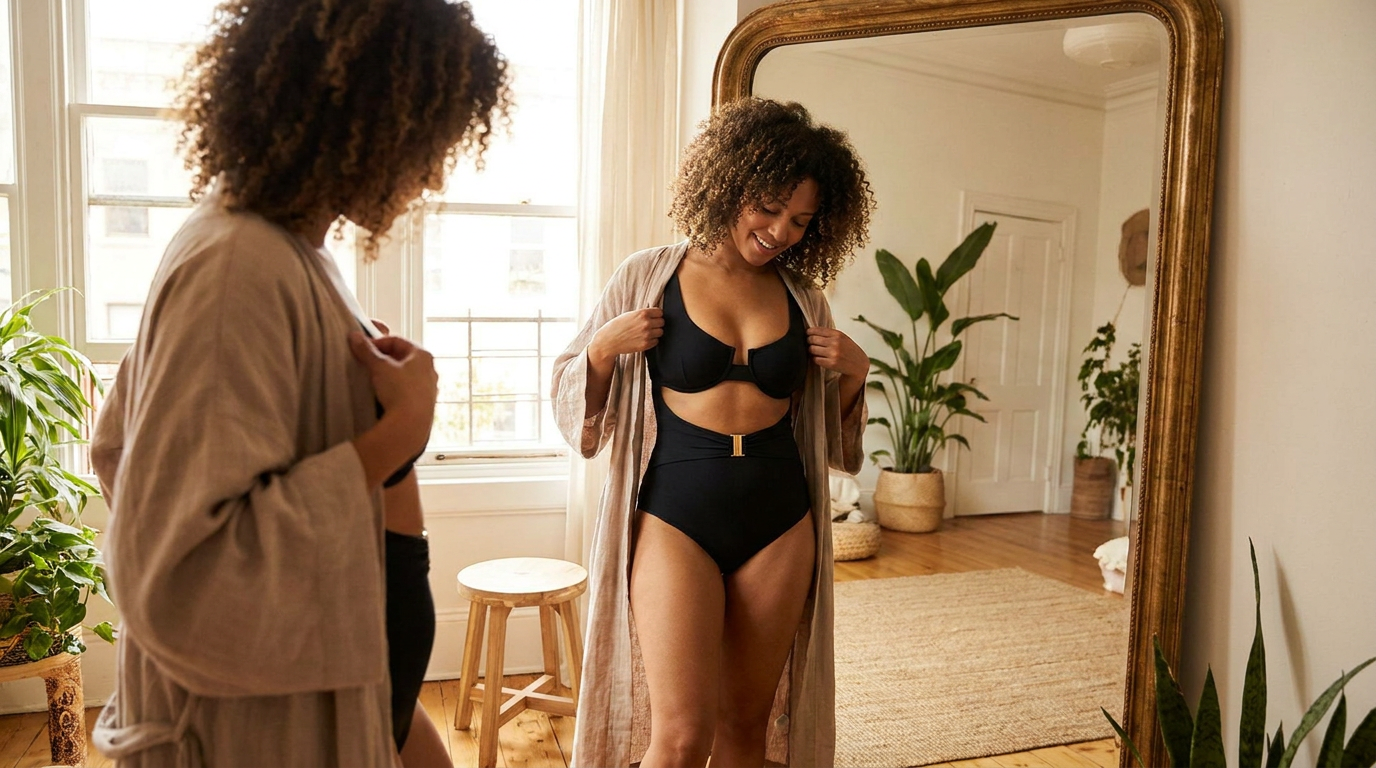
How Does the U-Wire Cutout High Waisted Textured Swimsuit Fit?
 Priya RamanSenior Analyst
July 24, 2026 — The U-Wire Cutout High Waisted Textured Swimsuit provides a structured, high-support fit by utilizing a rigid U-shaped metal insert between the bust cups to maintain architectural integrity.
This design bridges the gap between aesthetic negative space and functional support by using the U-wire as a central anchor point, ensuring the textured fabric remains flush against the torso despite strategic cutouts.
How does the U-wire influence structural support?
The U-wire serves as a mechanical stabilizer that prevents the center-front of the swimsuit from collapsing. While standard wireless suits rely on fabric tension, the U-Wire Cutout High Waisted Textured Swimsuit uses the wire to create a fixed distance between the bust peaks. This mechanical separation maintains the silhouette under the weight of water. According to market data from Bikini Village, premium ribbed cut-out one-piece swimsuits often command prices up to $129.95 because these reinforcements require precise manufacturing.
The textured ribbing adds multidirectional stretch that complements the rigid wire. While brands like J.Crew have seen high demand for similar ribbed cutout one-piece swimsuit designs, the integration of a high-waisted bottom provides necessary counter-tension to the upper U-wire. This creates a balanced distribution of force, preventing the suit from shifting during active use. Torso length is the fit variable this construction is most sensitive to, and the one size charts describe worst. Because the U-wire fixes the bust anchor and the high waist fixes the lower band, the distance between them is effectively set by the suit — so a long-torsoed wearer feels the whole architecture pulled downward, with shoulder straps digging as they stretch to close the gap, while a short torso experiences the reverse: the waist panel riding up past its intended line and fabric slack pooling at the cutout. The diagnostic is simple: straps carving into shoulders while the wire sits low means the suit's torso run is too short for you; a wire that floats away from the sternum while the waistband climbs means it is too long. Wearers at either extreme should look for listings that state torso length or offer tall/petite variants, because in a structured one-piece this measurement outranks cup size and dress size combined — the stretch fabric forgives width generously, but the wire-to-waist distance is nearly rigid.
Why is textured fabric preferred for cutout silhouettes?

Photo by https://kaboompics.com/ on Pexels
Textured fabric offers a higher density-to-weight ratio that masks seams and provides a smoothing effect. If a swimsuit features large cutouts, the fabric must resist rolling or bunching. Ribbed materials are naturally resistant to edge-curling, a common complaint in the ribbed cutout one piece swimsuit category. Data from the Of One Sea Ribbed Collection shows high-quality ribbed textiles (priced approximately $57.99 on sale) are used because the vertical lines draw the eye inward, enhancing the slimming effect of the high-waisted cut.
The tactile fabric interacts with the U-wire for a cohesive aesthetic. Compared to a high waisted textured bikini, the one-piece variant offers more continuous surface area for compression. By evaluating U-Wire Cutout High Waisted Textured Swimsuit specs, it is evident that the combination of 3D texture and metallic support creates a garment that performs like activewear. How the cutouts behave in actual water deserves honest treatment, because the fitting-room impression and the swimming reality differ. Lounging, wading, and casual swimming are exactly what the architecture is built for — the counter-tension between wire and waistband keeps the openings composed through sitting, walking, and the deck-chair shuffle. Sustained lap swimming is a different assignment: every stroke cycles the fabric bridges around the cutouts, and water drag works on the open edges in a way dry movement never does, so dedicated swimmers should expect to make small adjustments at the wall and reserve this suit for the resort rather than the training pool. The graceful exit is part of the technique too — a wet suit exits the water heavier, and one smoothing pass of the fabric bridges as you stand keeps the geometry where the designer put it.
And the tan-line disclosure every cutout owner deserves before the first long afternoon: those sculpted openings print themselves onto sun-exposed skin with impressive fidelity. Sunscreen diligence around the cutout borders is both skin care and, in effect, wardrobe planning for everything strapless you own.
Quick answers
Q: What is the primary benefit of the U-wire in this swimsuit? A: The U-wire provides a rigid central anchor that maintains bust separation and prevents sagging, a feature found in premium designs from Bikini Village.
Q: Does the ribbed fabric provide better coverage than smooth spandex? A: Yes, the 3D texture is thicker than standard materials, helping hide lines and providing a secure feel. J.Crew's popular ribbed cutout designs utilize this for its flattering properties.
Q: Is the high-waisted portion of the suit adjustable? A: The waistband is fixed to maintain cutout integrity, but the high-elastane fabric allows it to contour to different torso lengths, a common design choice in the Of One Sea Ribbed Collection.
Learn more about U-Wire Cutout High Waisted Textured Swimsuit at https://ucuthighwaistedswimsuit.com.
Protecting the wire between wears
The U-wire is the one component of this suit that ordinary swimwear habits can destroy, because it holds its engineered curve only as long as nothing forces it flat. Packing is where the damage happens: folding the suit across the chest panel creases the wire channel and can put a permanent kink in the wire itself, after which the center-front never sits flush again. The safe fold goes the other way — lay the suit flat, fold the leg section up over the torso, and let the bust area travel unbent on top of the packing cube rather than wedged under shoes. At home, flat in a drawer or on a hanger both work; what does not is the balled-up-in-a-beach-bag week that soft suits shrug off.
Give the wire channel a ten-second inspection at the start of each season: run a thumb along the casing feeling for a poking wire end or a flattened arc. A wire beginning to escape its channel is repairable early — a few hand stitches closing the casing — and a ruined suit if it is discovered mid-vacation instead.
Sources

Photo by Jess Loiterton on Pexels