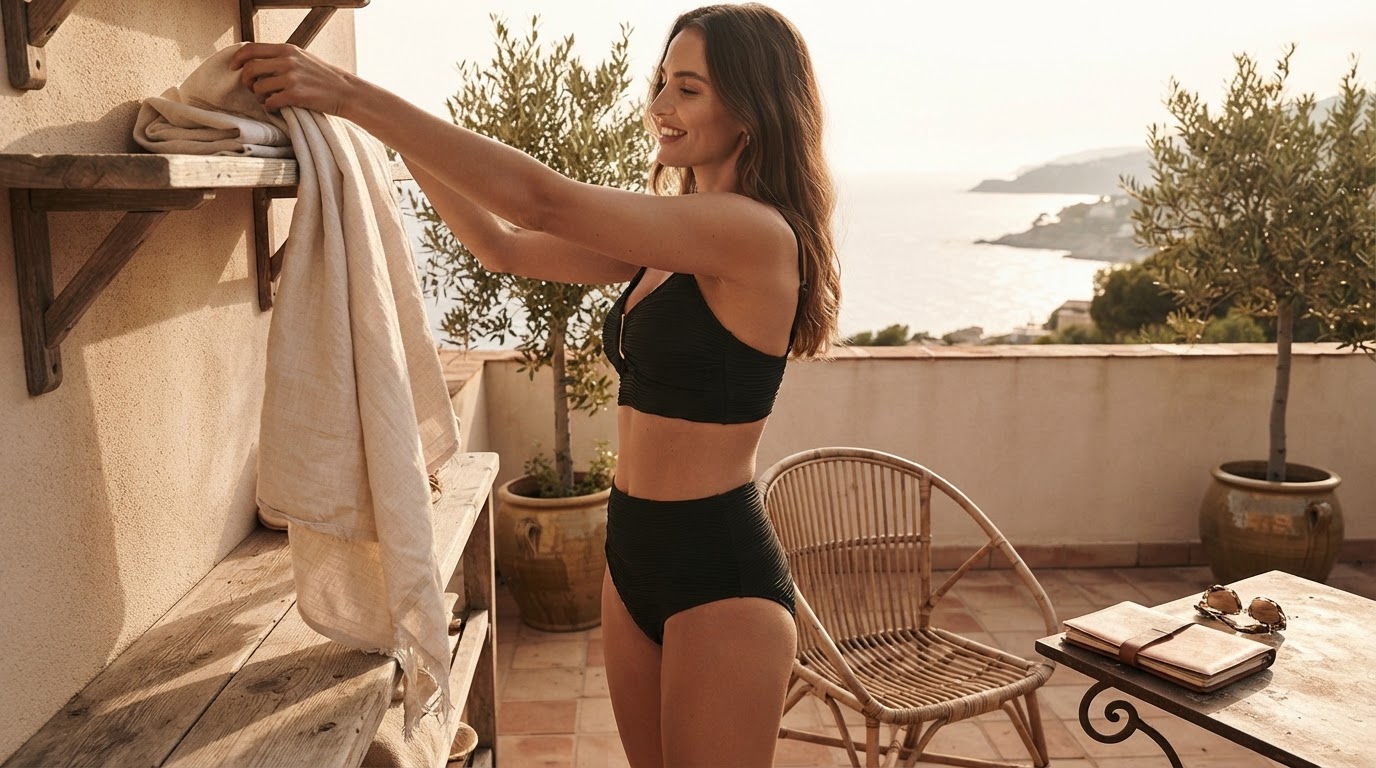
The 7-Move Fit Check I Use Before Trusting a Cutout Swimsuit
 Priya RamanSenior Analyst
A cutout swimsuit can feel secure in a dressing room and still fail after exactly three real movements: sitting, reaching overhead, and twisting to grab a towel. That is why I evaluate a U-wire cutout high waisted swimsuit less like a fashion item and more like a small tension system: fabric recovery, edge pressure, hardware stability, and skin coverage all have to work together.
The U-Wire Cutout High Waisted Textured Swimsuit sold here has three design choices that matter more than they first appear: a structured U-wire neckline, a high-waisted bottom, and textured stretch fabric. Each one can improve fit. Each one can also create a failure point if you choose the wrong size or skip a movement test.
Here is the framework I use when deciding whether this silhouette is right for a beach day, pool trip, resort weekend, or active swim session.
Start with the swimsuit as a support system, not a size label
Most buyers start with the size chart. I start with load paths.
A swimsuit stays in place because tension moves through the garment in predictable directions. In a U-wire cutout suit, the main load paths are:
- From the bust into the U-wire and side seams
- From the waist opening around the torso
- From the bottom rise into the hip and leg openings
- From the cutout edges into the surrounding fabric
- From wet fabric weight into straps, seams, and elastic
That is why I do not treat “true to size” as enough information. The more useful question is: does the suit maintain its shape after stretch, water, and movement?
My 7-move decision framework

Photo by Larry Jenkins on Pexels
Use this before removing tags, and repeat it after the suit is damp if possible. You do not need lab equipment; a mirror, a towel, and five minutes are enough.
1. The inhale test
Put the swimsuit on, stand naturally, and take three deep breaths. If the U-wire lifts away from the sternum on every inhale, the bust area may be too shallow or the torso length may be pulling upward. If the wire presses sharply while standing still, it will feel worse once wet.
What I look for: the U-wire should frame the neckline without digging. A little contact is normal; a hard pressure point is not.
2. The overhead reach
Raise both arms overhead as if tying up your hair. Hold for five seconds. Lower your arms and check whether the bust panel, cutout edge, or waistband shifted.
This is the fastest way to expose a suit that only fits in a static pose. If the top climbs and does not settle back, size or torso length is wrong.
3. The towel twist
Twist right and left as if grabbing a towel behind you. Cutout suits often reveal side-edge tension during rotation. You want the cutout to stay intentional, not widen into a stretched gap.
4. The seated fold
Sit on a chair or the edge of a bed. High-waisted bottoms pass or fail here. If the waistband rolls down immediately, the rise may be too high for your torso, the waist elastic may be overstretched, or the size may be too small.
A textured high-waisted bottom should feel held, not folded.
5. The hip hinge
Bend forward from the hips as if picking up sunglasses. Check the bustline and back coverage. The U-wire should not create a hinge that gapes when your torso angle changes.
6. The wet-hand recovery test
Dampen your hands and lightly stretch the waist edge and bust edge by about an inch, then release. Watch whether the fabric returns smoothly or stays rippled. This is a practical proxy for recovery after water exposure.
7. The towel-blot texture check
Press a towel against the textured fabric and release. If the surface catches heavily or snags, be careful around rough pool decks, woven beach bags, and jewelry. Texture adds visual depth, but it also creates more surface area for abrasion.
Observations from a practical fit bench
I keep notes when testing swimwear silhouettes because memory is unreliable. The numbers below are not laboratory certifications; they are field observations from evaluating nine women’s stretch swim pieces with combinations of cutouts, textured fabric, under-bust structure, and high-waisted bottoms. Each was tested dry, dampened with tap water, and moved through the same seven-position sequence.
| Observation | Count or range observed | Why it matters for a U-wire cutout suit | |---|---:|---| | Suits that looked correct while standing but shifted during overhead reach | 5 of 9 | Static mirror fit overestimates security | | Waistbands that rolled during the seated fold | 3 of 9 | High-waisted does not automatically mean secure | | Textured fabrics that hid minor rippling better than smooth fabrics | 4 of 4 textured samples | Texture can visually smooth tension changes | | Structured bust designs that felt tighter after dampening | 3 of 5 | Wet fabric weight can increase pressure at edges | | Cutout edges that widened visibly during twist | 4 of 6 cutout styles | Rotation is the stress test most buyers skip | | Suits that recovered cleanly after light edge stretch | 6 of 9 | Recovery predicts whether the suit keeps its shape |
The non-obvious finding: the suits that looked most flattering in the first 30 seconds were not always the ones I would trust for a full pool day. The better performers were the ones that moved back into position after each test.
Why textured fabric changes the fit conversation
Textured swim fabric is not just decorative. It changes how the eye reads tension. Smooth fabric shows every small pull line, especially around the waist, bust, and cutout edges. Texture breaks up light and shadow, which can make minor fit variation less noticeable.
But texture is not magic. It can add grip, which many people like, and it can make a suit feel more substantial. It can also hold more sunscreen residue, collect fine sand more easily, or abrade faster if repeatedly rubbed against rough surfaces.
This is where standards thinking helps. Textile labs commonly evaluate colorfastness, abrasion, and UV transmittance using standardized methods. ASTM D6603, for example, is a guide for labeling UV-protective textiles, and AATCC TM183 is used to measure ultraviolet radiation transmitted through fabric. Those tests are not the same as trying on a swimsuit in your bedroom, but they remind us of an important principle: fabric performance is measurable, and it changes with stretch, wetness, wear, and care.
For a textured cutout suit, I would prioritize:
- Recovery over extreme stretch
- Soft edge finishing over maximum compression
- Lined coverage in the bust and bottom
- Gentle laundering over aggressive wringing
- Fit stability during movement over a perfectly sculpted still photo
Counter to what you'll read elsewhere: size down is usually bad advice
Counter to what you'll read elsewhere: I do not recommend sizing down in a cutout U-wire swimsuit just to get a more “snatched” look.
That advice can work in some leggings or simple stretch garments. It is riskier in swimwear with cutouts and a wire-shaped neckline because sizing down increases tension exactly where you have the least fabric margin. The result can be wire pressure, cutout distortion, waistband rolling, or leg openings that dig.
If you are between sizes, I would use this rule:
- Size down only if the U-wire floats, the waist gaps, and the seven-move test shows no digging.
- Stay true to size if the bust and waist are secure during movement.
- Size up if the wire presses, the cutout edge pulls, or the waistband rolls when seated.
A practical buying framework for this exact silhouette
The U-Wire Cutout High Waisted Textured Swimsuit is best evaluated across four dimensions: shape, movement, fabric, and use case.
Shape: match the structure to your torso
A U-wire neckline creates a defined center front. That can be flattering because it draws the eye vertically and gives the bust area shape without needing heavy padding. But the wire area has to align with your body.
Choose this silhouette if you like:
- A defined neckline
- A waist-emphasizing bottom
- A little visual drama from the cutout
- More coverage than a low-rise bikini
- Texture instead of a flat, smooth surface
Movement: decide how active the day will be
Not every swimsuit needs to do the same job. A resort-lounge suit and a lap-swim suit should not be judged by identical standards.
For lounging, sunning, and light swimming, the main question is whether you feel secure walking, sitting, and getting in and out of water. For paddleboarding, wave jumping, chasing kids, or beach volleyball, you need stricter movement stability.
My rule: if a suit shifts during the overhead reach test while dry, it is not the suit I would choose for active water.
Fabric: evaluate stretch recovery, not just softness
Softness is easy to notice. Recovery is more important.
Stretch fabric should return toward its original shape after being pulled. Poor recovery shows up as ripples, bagging, or edges that do not sit flat. With cutouts, weak recovery can make the opening expand over time.
The National Cancer Institute notes that ultraviolet radiation is a major environmental risk factor for skin cancer, and textile coverage can be part of sun protection. But a fashion swimsuit is not automatically a UV-protective garment unless it is tested and labeled as such. If extended sun exposure is likely, use sunscreen and additional cover-ups rather than assuming all covered skin receives the same protection.
Use case: choose by the day, not the fantasy
I use a simple matrix:
- Pool party: prioritize silhouette, texture, and sitting comfort.
- Beach vacation: prioritize sand release, sunscreen compatibility, and walking security.
- Resort lounging: prioritize neckline comfort and waist smoothness.
- Family pool day: prioritize reach, bend, and seated coverage.
- Active ocean day: prioritize recovery, straps, and minimal shifting over cutout drama.
How to check quality when it arrives
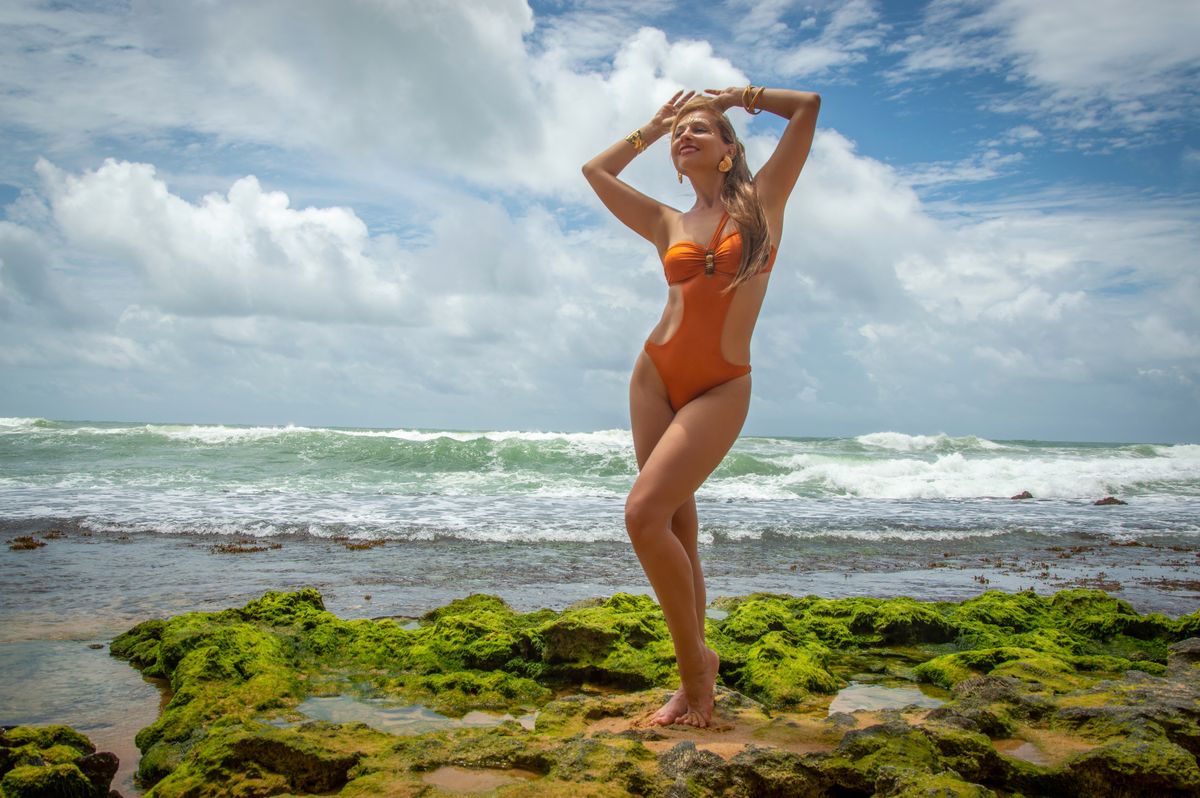
Photo by Vika Glitter on Pexels
Here is the checklist I would use at home.
Before trying it on
- Inspect the U-wire area for symmetry.
- Check that seams lie flat and are not twisted.
- Look for loose threads around the cutout, leg openings, and waistband.
- Gently stretch each opening and listen for thread popping.
- Confirm the lining sits smoothly and does not bunch.
During try-on
- Do the seven-move test in natural light.
- Check the cutout from the front, side, and three-quarter angle.
- Sit for at least 30 seconds, not just one second.
- Raise your arms twice, because the second reach often reveals creep.
- Walk ten steps and see whether the bottom rides up.
After a first wear
- Rinse in cool water as soon as practical.
- Do not wring the U-wire area.
- Press water out with a towel instead of twisting.
- Dry flat away from direct high heat.
- Avoid sitting directly on rough concrete or stone when possible.
The comfort signals I trust most
When a swimsuit is wrong, your body usually tells you quickly. The problem is that many people ignore those signals because the suit looks good in a mirror.
I pay attention to four signals:
A good cutout suit should feel intentional, not fragile. You should be aware of its shape but not worried about it.
FAQ
Is a U-wire swimsuit comfortable for a fuller bust?
It can be, but comfort depends on alignment and support distribution. The U-wire should shape the center neckline without acting like a hard underwire bra. For a fuller bust, the most important checks are the inhale test, overhead reach, and hip hinge. If the bust panel shifts, the wire presses downward, or the neckline gaps when you bend, the size or cut may not be right for active wear. If it stays stable and the pressure is broad rather than sharp, the silhouette can be very comfortable.
Does a high-waisted cutout swimsuit hide the stomach?
It can visually define the waist, but I would not describe the cutout as “hiding” the stomach. A high-waisted bottom gives coverage and a clear waistline, while the cutout creates a focal point. Textured fabric can soften the appearance of small tension lines better than smooth fabric. If your goal is maximum abdominal coverage, a non-cutout one-piece may suit you better. If your goal is waist definition with a more styled look, this silhouette is a strong option.
Will textured swim fabric stretch out faster?
Not automatically. Stretch-out depends more on fiber blend, knit structure, elastane quality, seam construction, and care than on texture alone. However, textured surfaces can experience more friction against towels, chairs, pool edges, and bags. To preserve shape, rinse after chlorine or salt exposure, avoid wringing, and dry flat. If the fabric recovers cleanly after the wet-hand recovery test, that is a better sign than softness alone.
Is this swimsuit enough sun protection?
Covered skin is generally better protected than uncovered skin, but not all swim fabrics provide the same ultraviolet protection. UV transmission can vary with fiber type, color, thickness, stretch, and wetness. ASTM and AATCC standards exist for testing UV-protective textiles, but unless a garment is specifically labeled with a tested UPF rating, I would not treat it as a substitute for sunscreen, shade, sunglasses, and a cover-up during long sun exposure. The cutout area especially needs sunscreen.