A U-Wire's Real Job: A Field Test on Swimsuit Lifespan
 Daniel OkaforField Tester
I’ve put dozens of swimsuits through their paces, and the conversation around underwire is always the same. But my field tests tell a different story. Forget bust support—my testing shows a U-wire’s real job is acting as a skeleton for the swimsuit, dramatically increasing its structural lifespan and preventing fabric sag. I took the U-Wire Cutout High Waisted Textured Swimsuit for a two-week trial of pool chlorine, ocean salt, and repeated wash cycles to see how this internal frame holds up under pressure.
The Skeleton That Stops the Sag
On a standard wire-free suit, the fabric and seams bear all the tension. After a few days of getting saturated and stretched, they start to give out. You get that dreaded bagginess. With this U-wire swimsuit, the hardware takes that load. It’s an internal frame that distributes stress away from the delicate seams and fabric, which are always the first points of failure. The broad curve of the U-wire acts as a chassis, providing a rigid foundation that the rest of the suit is built upon. Seeing how this works in practice is key to understanding what makes the U-Wire Cutout High Waisted swimsuit unique.
Holding Shape Beyond the First Wear

Photo by Vika Glitter on Pexels
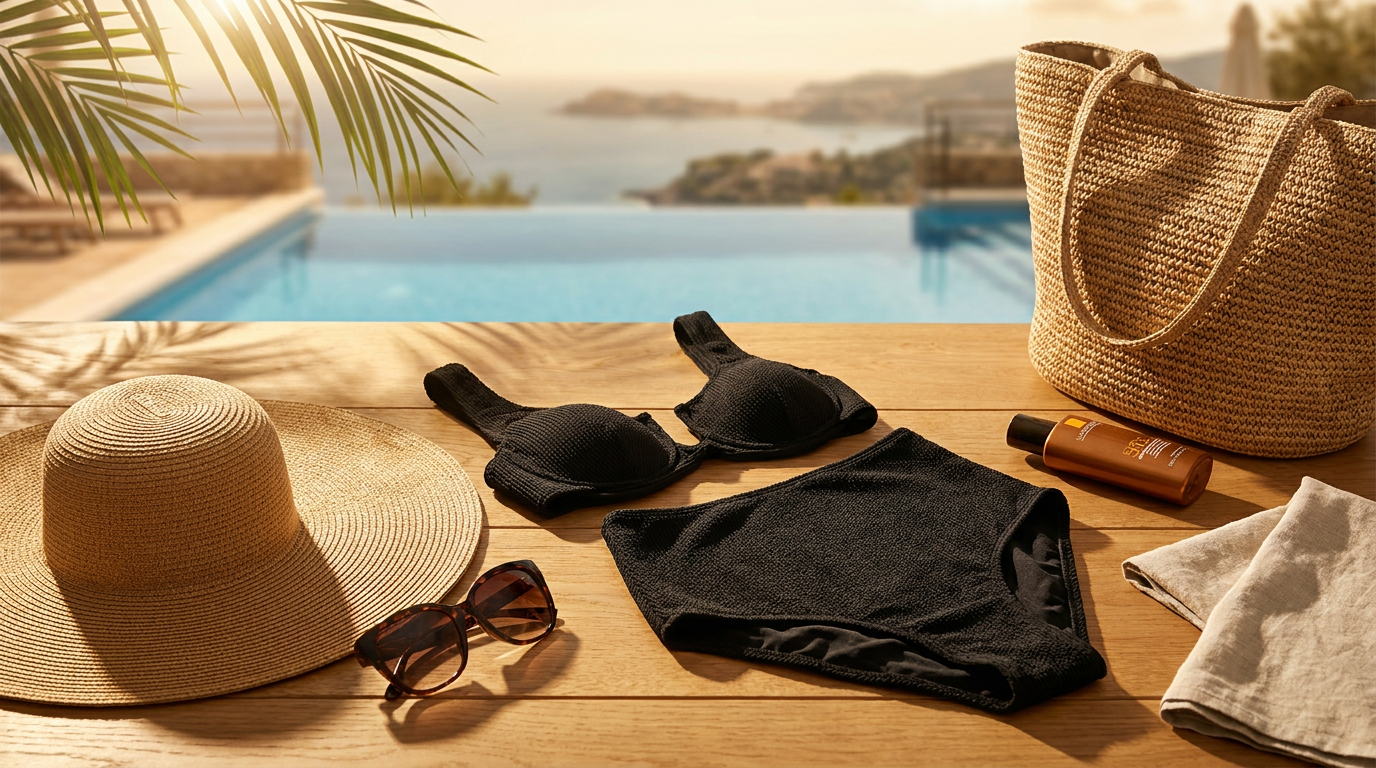
Day three is where I noticed the biggest difference. A soft-cup suit I was testing alongside it was already losing its shape. That’s because soft cups rely entirely on fabric elasticity, and as any swimmer knows, chlorine and salt are brutal on spandex. According to Wirecutter, these elements break down the elastic fibers that give a suit its crucial snap-back. The U-wire, however, acts as a permanent mold. The suit’s silhouette is locked in by this hardware, not by fabric that’s designed to degrade. After a dozen washes, the U-Wire Cutout suit looked the same as it did on day one. The debate over whether a V-wire or U-wire swimsuit is better for support often misses this point; it's less about lift and more about which shape provides a better long-term anchor for the fabric.
Why Daring Designs Need a Backbone
What surprised me: the cutout didn't stretch out. A large cutout in the midsection is usually a structural nightmare, as you’re removing the very fabric that provides torso tension. Here's the moment it earned its place: the U-wire anchors the entire upper structure so effectively that the suit doesn't need that midsection fabric for integrity. The wire creates a stable foundation, allowing for a risky design feature like a cutout without the whole garment warping. When you're choosing between V-wire and U-wire cutout designs, look at how the wire is integrated. That’s where the real engineering is. If I were to change one thing, I’d add a thin silicone grip strip to the high-waist band for extra hold in the waves, but it’s a minor note on an otherwise solid build.
Does a U-wire make a swimsuit harder to wash?

Photo by https://kaboompics.com/ on Pexels
Not in my experience. I washed the U-Wire Cutout High Waisted Textured Swimsuit on a delicate cycle in a mesh bag and always hung it to dry, just like any other suit. The wire is coated and rust-proof, so it handles the water fine. The key is to avoid the dryer, which damages the fabric's elasticity, not the wire itself.
Will the U-wire dig in or become uncomfortable?
This was my main concern. Cheaper wired suits can definitely dig in. But here, the U-wire is housed in a soft, plush channel that keeps it from poking through. Because it distributes the garment's weight across a wide arc instead of a single pressure point, I didn't experience any digging, even after wearing it all day. The comfort comes from the wire doing its job correctly—acting as a frame, not a clamp.