The Structural Flaw in Tummy Control Cutout Swimsuits
 Maya ChenContributing Editor
The 'tummy control' in most cutout swimsuits is an illusion; it doesn't smooth your midsection, it just squeezes it into a less flattering shape elsewhere. The conventional wisdom says that a high-waisted panel combined with a stylish cutout offers the best of both worlds: shaping and fashion. This perspective ignores the basic physics of compression. True midsection control requires continuous, uninterrupted fabric tension to distribute pressure evenly. By removing material from a critical support area, a cutout fundamentally compromises the garment's ability to smooth.
The Spillover Effect: Why Cutouts Undermine Control
Here's the part nobody talks about: a cutout creates a pressure release point. Instead of being uniformly compressed, skin and tissue are displaced, often bulging around the edges of the opening. This 'spillover effect' is most noticeable at the top edge of the high-waist panel, creating a horizontal ridge that undermines the slimming silhouette the suit promises. Effective shapewear, as detailed in technical breakdowns by outlets like Wirecutter, relies on unbroken panels to create a smooth gradient of compression. A hole in the fabric breaks this system. The tension from the high-waisted bottom pulls down, while the top pulls up, and the unsupported skin in between has nowhere to go but out.
Can a U-Wire Anchor Mitigate the Flaw?

Photo by FbyF Studio on Pexels
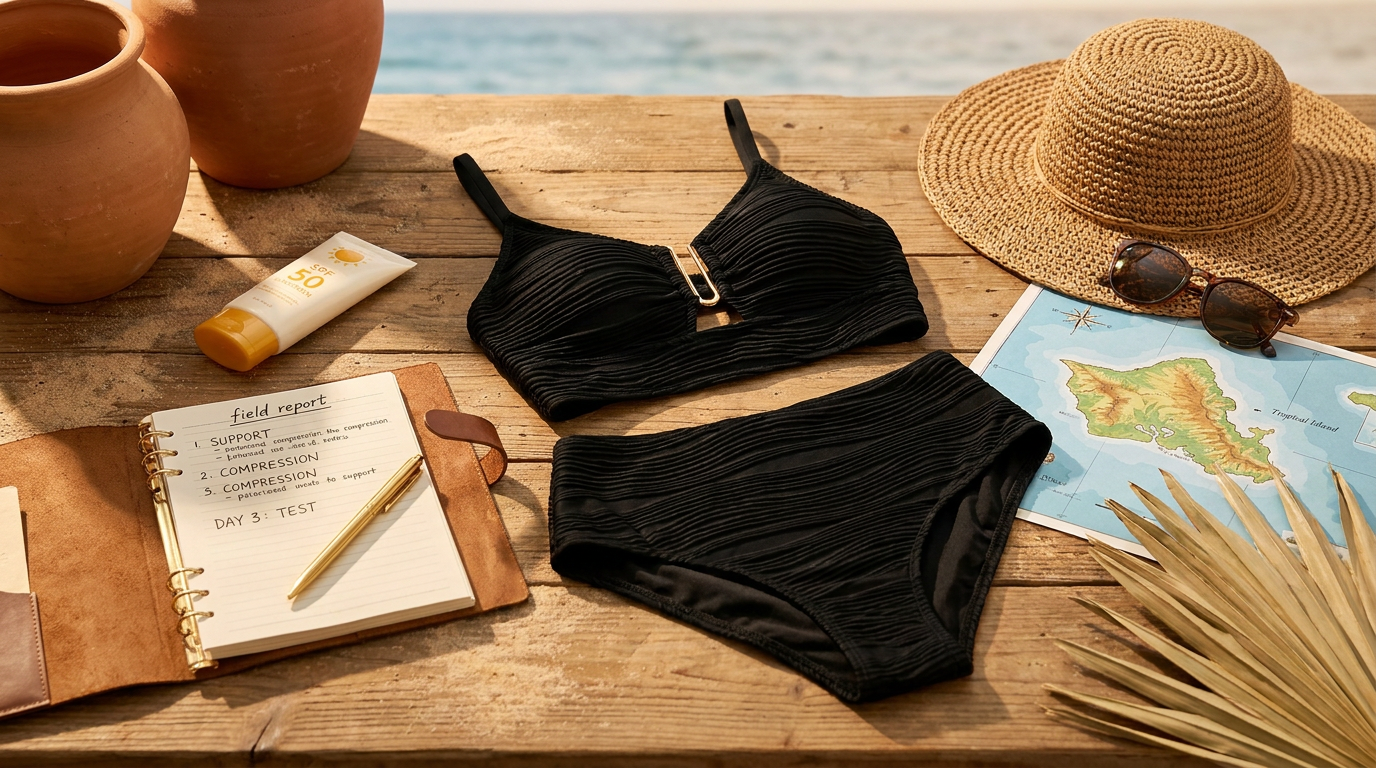
Given this structural problem, the focus shifts from finding a suit that "controls" to finding one that minimizes this displacement. The U-Wire Cutout High Waisted Textured Swimsuit attempts to solve this with a rigid central anchor. The U-wire isn't just a decorative element; it fixes the vertical distance between the top and bottom sections. This prevents the top from riding up and exacerbating spillover when the high-waisted panel is under tension. The textured fabric also adds a degree of structural integrity, masking minor unevenness better than slick, thin spandex. While no cutout design can fully replicate the hold of a solid one-piece, the performance of this tummy control cutout swimsuit is therefore less about compression and more about stabilization.
A Structural Checklist for Cutout Swimsuit Claims
Evaluating a tummy control cutout suit requires a skeptical eye focused on engineering, not just dressing room aesthetics. Before accepting any slimming claims, verify these structural points:
- Anchor Point: Is there a rigid component like a U-wire or firm boning that locks the top and bottom sections in place? Without it, the cutout will stretch and distort.
- Fabric Density: The material must have enough inherent structure to resist deformation. A flimsy, overly stretchy fabric will offer no support.
- Cutout Placement: The opening should be placed high on the ribcage, well above the soft tissue of the midsection, to reduce the potential for bulging.
- Seam Reinforcement: Check for double-stitching at the hips and along the cutout edge, as these are high-stress points that bear the load of the fabric tension.
Does a tummy control cutout swimsuit actually work?

Photo by Larry Jenkins on Pexels
Most do not deliver the "tummy control" they advertise. The cutout creates a weak point that causes skin and tissue to bulge, defeating the purpose of the compressive fabric. However, suits with specific structural features—like a rigid U-wire anchor and high-density fabric—can mitigate this flaw by stabilizing the garment rather than truly compressing the midsection.
How is a U-wire different from a regular underwire in a swimsuit?
A standard underwire is designed to support the bust. A structural U-wire, placed centrally between the bust and the high-waist panel, acts as a rigid anchor. It maintains a fixed distance between the top and bottom of the suit, preventing the fabric from stretching vertically and the cutout from distorting, which is a primary cause of the unflattering "spillover effect."